Human & Social Services (435)

Offered on: Brown County Campus (Day/Evening) & Central Campus (Day/Evening)
All students who complete the HSSR 1105 Survey of Substance Use Disorders with a letter grade of 'C' or higher meet the Preliminary CDCA. Students can apply for this certificate after completing the course before graduating. Students in both programs qualify for this credential. View more information about the Preliminary CDCA on the Chemical Dependency Professionals Board website.
Nature of Profession
Human and social services professionals work in community, social service, behavioral health, and agency settings. They may assist clients in obtaining benefits and services, assess client needs and eligibility, coordinate services, maintain case records, organize and lead group activities, provide emotional support or crisis intervention, and support programs that respond to community needs.
Professionals working in chemical dependency settings may provide case management, education, prevention, and counseling-related services to individuals and families affected by substance use disorders. Employment settings may include therapeutic communities, rehabilitation centers, inpatient facilities, residential programs, outpatient clinics, mental health centers, detoxification units, and other organizations focused on addiction treatment, education, prevention, or recovery.
Human and social services professionals frequently work under the direction of qualified professionals, including social workers, professional counselors, psychologists, and program directors. The amount of responsibility and supervision varies according to the position, employer, professional credential, and work setting.
To view current Job Postings related to the Human & Social Services Program visit:
Careers in Human & Social Services:
This information is provided by ONetOnline.org
Program Design
Entry-level courses in the helping professions such as psychology, cultural diversity, sociology, social problems and interviewing techniques will be offered. Specialty classes will include substance abuse, case management, counseling, crisis intervention, mental retardation and gerontology. The program has been designed to meet the course work standards of the State of Ohio Counselor, Social Worker, and Marriage and Family Therapist Board certification as social work assistant. Individuals will be provided opportunities for personal and professional growth through knowledge-based learning, experiential processes, community involvement and 480 hours of practical experience under direct supervision of professionals in local agencies. Persons pursuing a career in human services should recognize that to be successful, they must be emotionally stable, creative and flexible. Human services professionals must be able to work effectively with diverse groups of people and individuals with a wide variety of ages, racial and cultural backgrounds and life situations.
Students complete the degree through one of the following focus areas:
Social Work Focus
The Social Work focus prepares students for general human services practice through coursework in psychology, sociology, cultural awareness, case management, counseling, crisis intervention, trauma-informed treatment, and related helping-profession content. The focus prepares students for entry-level employment in general human and social services settings and for work with individuals, families, groups, and community organizations in a variety of social service settings.
Chemical Dependency Focus
The Chemical Dependency focus prepares students for entry-level work involving individuals and families affected by substance use disorders. Its specialized coursework addresses diversity, lifespan psychology, prevention, diagnosis and treatment of chemical dependency, and the psychology of addiction and family systems. The focus supports Chemical Dependency Counselor Assistant certification eligibility.
Both focus areas include supervised practicum experiences that allow students to apply classroom knowledge, develop professional skills, and demonstrate ethical and appropriate workplace behavior in local agencies. Students completing the Chemical Dependency focus must complete the required practicum experience in an appropriate chemical dependency counseling or treatment setting.
Individuals pursuing careers in human and social services should be emotionally stable, creative, flexible, and able to work effectively with people of different ages, backgrounds, cultures, and life circumstances.
A grade of C (2.00) or better is required in every course in the program. Any required course in which a grade below C is earned must be repeated. Life-experience credit may not be used to fulfill program graduation requirements.
Focus Area Requirement: Students must select either the Social Work focus area or the Chemical Dependency focus area and complete all four courses assigned to that focus. Courses from the two focus areas may not be combined.
Program Outcomes
Graduates of this program should be able to:
- Establish and maintain effective therapeutic relationships with others.
- Demonstrate ability to fulfill individual learning objectives of the practicum experience, established collaboratively by the student, instructor, and practicum site supervisor.
- Demonstrate thorough understanding of the basic concepts of generalist human services practice in a variety of social service settings.
- Use fundamental counseling skills (including active listening, clarification, reflection, summarizing, paraphrasing, and non-verbal responses) in helping relationships.
- Demonstrate the ability to accurately gather information through intake interviews and mental status exams.
- Explain the major concepts and specific techniques associated with selected major counseling theoretical perspectives. HSSR2210
- Demonstrate thorough understanding of family and group dynamics and the ability to use basic facilitative skills in the group setting.
- Demonstrate ability to adhere to professional and ethical standards and demonstrate familiarity with ethical codes.
- Demonstrate awareness of, sensitivity to, and respect for cultural ethnic and life-style diversity.
Courses
Fall Semester | First Year
| Course # | Course Title | Credits |
|---|---|---|
| ENGL 1101 | English Composition I | 3 |
| HSSR 1110 | Introduction to Social Services & Ethical Procedures | 3 |
| MATH 1115 | Math for the Business and Social Science | 3 |
| PSYC 1110 | Principles of Psychology | 3 |
| SOCI 2232 | The Criminal Justice System | 3 |
| Complete the course assigned to the selected focus area: | ||
| HSSR 1140 | Social Work Focus: Racial & Cultural Diversity in the Helping Professions | 3 |
| SOCI 1107 | Chemical Dependency Focus: Introduction to Diversity | 3 |
Spring Semester | First Year
| Course # | Course Title | Credits |
|---|---|---|
| ENGL 1102 | English Composition II | 3 |
| HSSR 1105 | Survey of Substance Use Disorders | 3 |
| HSSR 1135 | Affective Education & Group Process | 3 |
| HSSR 1150 | Case Management & Writing in the Helping Professions | 3 |
| Complete the course assigned to the selected focus area: | ||
| PSYC 2207 | Social Work Focus: Human Growth & Development | 3 |
| PSYC 1111 | Chemical Dependency Focus: Life Span & Human Development | 3 |
Fall Semester | Second Year
| Course # | Course Title | Credits |
|---|---|---|
| HSSR 2210 | Counseling Theories | 3 |
| HSSR 2265 | Diagnosis and Treatment of Mental and Emotional Disorders | 3 |
| HSSR 2271 | Human Services Practicum I | 3 |
| SOCI 1170 | Introduction to Sociology | 3 |
| BIOL 1040 | Human Biology I | 4 |
| Complete the course assigned to the selected focus area: | ||
| HSSR 2280 | Social Work Focus: Crisis Intervention and Trauma-informed Treatment | 3 |
| HSSR 2216 | Chemical Dependency Focus: Prevention, Diagnosis & Treatment of Chemical Dependency | 3 |
Spring Semester | Second Year
| Course # | Course Title | Credits |
|---|---|---|
| HSSR 2211 | Counseling Techniques | 3 |
| COMM 1115 | Fundamentals of Effective Speech | 3 |
| HSSR 2272 | Human Services Practicum II | 3 |
| Complete the course assigned to the selected focus area: | ||
| SOCI 1150 | Social Work Focus: Marriage & Family | 3 |
| PSYC 2225 | Chemical Dependency Focus: Psychology of Addiction & Family Systems | 3 |
Program Total: 64
Transfer Partnerships
Southern State has articulation/transfer partnerships with many four-year institutions. Find the transfer partnerships for Human & Social Services below.

Lindsey Wilson courses are offered on SSCC's Central Campus
Request More Info / Contact Us
Faculty
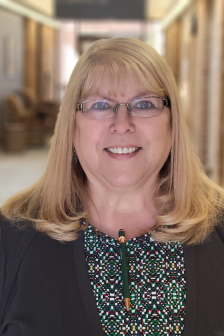 Patricia Beach
- Instructor, Human & Social Services
- 800.628.7722 x3632
- pbeach@sscc.edu